Why Children Hit Their Siblings
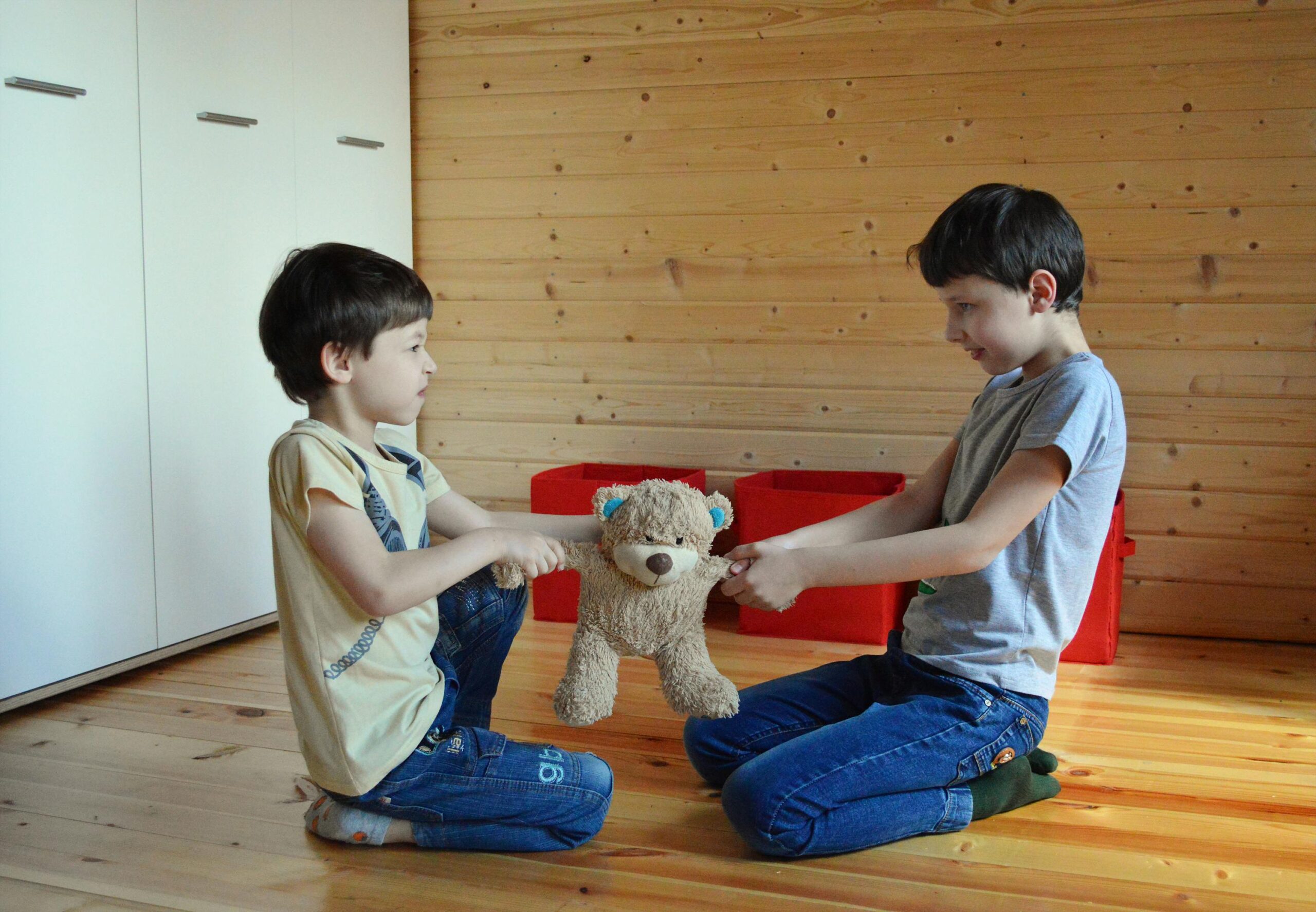
In this article, you will understand why your child may hit their sibling, what patterns to look for around it, and what to change first so the situation feels less chaotic and more workable.
Quick summary
- Not all sibling conflict is the same. Ordinary disagreements are different from a repeated hitting pattern.
- Children often hit siblings for reasons that make sense in the moment, even when the behaviour is not acceptable.
- The same behaviour can serve different jobs. Your child may be trying to get something, stop something, keep something, or change the situation quickly.
- Sibling aggression often becomes clearer when you look at what happened just before, what your child did, and what happened straight after.
- The most useful first step is usually not trying to solve every family conflict at once. It is choosing one main hitting pattern and understanding it more clearly.
Would it help to work out where to start? If sibling hitting has become a repeated pattern, a free 25-minute Behaviour Clarity Session can help you identify one practical starting point.
For parents, focused on one behaviour in one home routine. No preparation or expectation to buy further support. Book with your name and email; we’ll guide you through consent and brief checks at the start of the call. Session information · Privacy.
When sibling conflict turns into hitting, it stops feeling like “just rivalry”
Most siblings annoy each other sometimes.
They argue. They compete. They grab. They wind each other up.
That does not automatically mean there is a major problem.
But when one child is repeatedly hitting, punching, kicking, pushing, or hurting a sibling, it often stops feeling like ordinary sibling tension and starts to feel like something the family is living around.
You may find yourself:
- watching constantly
- separating them before things build
- feeling tense during ordinary routines
- dreading toy disputes, transitions, or downtime
- wondering why the same thing keeps happening
That matters, because repeated sibling aggression can have real effects on children’s wellbeing, and parents often want more than generic “sibling rivalry” advice. The sibling-aggression intervention literature treats this as a meaningful family problem, not just harmless background noise.
Why children hit their siblings
There is no single reason.
But a simple way to think about it is this:
hitting often works fast
It may:
- get a toy back
- make a sibling move away
- stop teasing
- interrupt a demand
- force adult attention
- change the balance of power in the moment
That does not make the behaviour okay.
It means the behaviour may be doing a job in that situation.
In families with high conflict, siblings can become one of the places where children learn that aggression changes things quickly, especially if sibling disputes are left to run on or are handled inconsistently.
The first useful distinction: conflict versus repeated aggression
One of the most helpful starting points is to separate:
Ordinary sibling conflict
This might involve:
- arguing
- snatching
- shouting
- competing over turns
- getting annoyed with each other
- brief, low-level disputes that both children recover from fairly quickly
Repeated sibling aggression
This is more concerning when:
- one child is regularly hitting, kicking, biting, or pushing
- the same child is often getting hurt
- it happens across multiple routines, not just one rare flashpoint
- the behaviour is getting more intense or more frequent
- one child seems to be learning that aggression is the fastest way to win
What the hitting may be trying to achieve
Different children hit siblings for different reasons.
1. To get or keep something
Your child may be trying to:
- get a toy
- keep access to an activity
- stop a sibling touching their things
- win a turn
- control who gets what
Here, the behaviour may be linked to access and control.
2. To stop something aversive
Your child may be trying to stop:
- teasing
- being copied
- being crowded
- a sibling taking over
- a sibling touching them
- noise or irritation that has built up
Here, the behaviour may function more like a fast protest or escape response.
3. To force adult attention into the moment
Sometimes the sibling interaction is only part of the picture.
A child may hit because aggression immediately:
- brings an adult over
- stops the routine
- changes the focus of the room
- turns a low-attention moment into a high-attention one
4. Because the whole pattern has become coercive
In some families, sibling aggression is less about one single trigger and more about a repeated loop:
- irritation
- provocation
- retaliation
- adult reaction
- temporary reset
- then the same thing happens again later
That is often the point where the behaviour starts to feel “constant” rather than occasional.
What often makes sibling hitting more likely
There is usually a pattern, even if it feels chaotic.
Common situations include:
- sharing toys or materials
- one child approaching the other’s space
- transitions
- waiting
- boredom or low-structure time
- adult attention going to the other child
- tiredness, hunger, illness, or a harder day overall
- rough play that tips into real aggression
- one sibling repeatedly provoking, copying, or intruding
What to look at before deciding what to do
1. What exactly counts as the behaviour?
Be concrete.
Does it usually look like:
- open-hand hitting?
- punching?
- kicking?
- pushing?
- grabbing and hitting?
- hitting only when toys are involved?
- hitting only one sibling and not another?
A clear behaviour definition is often the start of a clearer plan.
2. What tends to happen just before?
Ask:
- what was the sibling doing?
- what was your child doing?
- were they being told to share, wait, stop, or move?
- had adult attention just shifted?
- had something been taken away?
- was the day already running hot?
3. What usually happens after?
This part matters a lot.
Ask:
- does your child get the toy?
- does the sibling back off?
- do adults rush in?
- does the whole activity stop?
- does one child get removed?
- does the aggressing child end up with more space, more control, or more attention?
That is often where the behaviour’s “job” becomes easier to see.
4. What early signs show it is building?
Useful early signs might include:
- glaring
- crowding
- grabbing
- louder voice
- repeated “stop it”
- copying
- hovering near a toy
- body tension
- pushing before hitting
A lot of families only start the plan at the hit.
Usually the earlier signs are more useful.
Three quick examples
Example 1: Toy access
One sibling has a toy. Your child asks, then grabs, then hits when the sibling refuses.
That suggests the behaviour may be about getting or keeping access fast.
Example 2: Intrusion and irritation
A younger sibling keeps following, copying, and touching your child’s things. Eventually your child lashes out.
That does not make the hitting okay, but it suggests the pattern may involve escape from intrusion rather than only “anger”.
Example 3: Adult attention shifts
You are helping one child with homework. The other starts bothering their sibling, then hits when the sibling reacts.
That may point to a pattern where sibling aggression helps pull adult attention into the moment.
Not sure which sibling-hitting pattern to focus on first?
You do not need to solve every family conflict at once. In a free 25-minute Behaviour Clarity Session, we can look at one recurring sibling-hitting situation and decide whether this support is a suitable next step.
What usually helps first
This article is about understanding the pattern, not fixing the whole family system in one go.
But a few first moves are usually worth making.
1. Choose one main sibling-aggression pattern
Do not try to solve:
- toy fights
- bedtime fights
- attention-seeking
- rough play
- school-fallout aggression
- general shouting
all at once.
Pick one:
for example, hitting when toys are taken or hitting during low-structure time after school.
2. Look at the environment, not just the child
It is easy to ask only, “Why did your child hit?”
Also ask:
- was sharing expected too soon?
- were the children too close together?
- was the activity too unstructured?
- were there not enough duplicates or turn-taking supports?
- was one child already overloaded?
One pattern I’ve seen is that, after repeated incidents, adults can begin to think of one sibling as “the aggressive one”. It is an understandable human shortcut, but it turns a behaviour that needs understanding into a story about who the child is. The behaviour is no longer separated from the person, and the child themselves can start to be viewed as the problem. Meanwhile, the other sibling may experience the adults’ responses as unfair or preferential treatment, placing further strain on family relationships.
A more useful question is what in the environment is making the hitting more likely and which skill the child may still need help developing. That might involve waiting, sharing, asking for space or coping when something does not go their way. Hitting still needs a clear safety response, but viewing it as behaviour that can be understood and replaced gives everyone somewhere constructive to go. In my experience, changing the adults’ perspective can be an important first step towards teaching the missing skills and reducing future risk.
3. Reduce the chances of rehearsal
If the same sibling-aggression loop is happening five times a day, that matters.
In the short term, it is usually sensible to:
- change the setup
- reduce hot-spot situations
- supervise high-risk routines more closely
- separate children earlier when the pattern is obvious
That is not “failing to teach sharing”.
It is stopping a coercive loop from getting stronger while you understand it better.
4. Teach one safer alternative over time
Depending on the pattern, that might be:
- asking for help
- using a short phrase like “move back”
- handing over a turn card
- asking for space
- asking an adult to step in before the hit
- leaving the situation earlier
5. Keep your response firm, calm, and predictable
The parenting evidence here is not perfect or sibling-specific in every case, but two things are fairly consistent:
- warmer, firmer, more structured parenting is generally associated with less sibling conflict than harsher or more chaotic patterns
- completely uninvolved responses are not usually the best fit for younger children who are still learning how to handle conflict safely
What often backfires
Treating all sibling conflict as harmless rivalry
Sometimes it is ordinary conflict.
Sometimes it is repeated aggression.
Those are not the same thing.
Waiting until the hit to intervene
The earlier part of the pattern is often where the useful leverage is.
Giving long explanations in the hottest moment
When both children are escalated, long teaching often lands badly.
Trying to make children “work it out themselves” too early
There is a place for stepping back.
But with younger children or repeated aggression, total non-involvement can leave them rehearsing the same bad loop without learning a safer way through it.
Expecting one parenting programme to solve everything for both siblings automatically
Behavioural parent training is evidence-based for disruptive behaviour overall, and NICE recommends parent training for conduct-type problems, but newer data suggest benefits may show up more clearly in the referred or target child than in a non-targeted sibling. That is one reason it makes sense to narrow to one main sibling-aggression pattern rather than assume broad spillover will solve the whole sibling system.
Frequently asked questions
Is sibling hitting normal?
Brief sibling conflict is common.
Repeated hitting that is frequent, intense, or distressing is worth taking seriously rather than brushing off as “just what siblings do”.
Does sibling hitting always mean jealousy?
No.
Jealousy may be part of the pattern in some families, especially when attention is involved, but many sibling-hitting patterns are also about access, control, escape, irritation, or repeated coercive loops.
Should you always step in?
Not always at the same level.
But repeated aggression usually needs more than standing back and hoping the children sort it out. Younger children, especially, often still need help learning how to handle sibling conflict without aggression.
When should you get extra help?
Get extra help if:
- one child is regularly being hurt
- the behaviour is escalating
- you cannot supervise the pattern safely
- there are injuries, severe fear, or major family strain
- the aggression seems to be part of a broader pattern of disruptive behaviour
A calmer next step
If your child keeps hitting their sibling, the first useful goal is not to solve every argument in the house.
It is to make one repeated pattern clearer.
When you can see:
- the situations where the hitting is more likely
- the earliest signs
- what your child may be trying to get, stop, or change
- what happens after
- what seems to make it worse
- what helps, even a little
the situation usually starts to feel less random.
And once it feels less random, you are in a much better position to decide what to change first.
A clearer starting point
If sibling hitting has become a repeated pattern and you would like help choosing where to start, book a free 25-minute Behaviour Clarity Session.
This session is not an emergency service. If there is an immediate risk of serious harm, use the appropriate urgent or emergency support instead.
References
National Institute for Health and Care Excellence. (2013, reviewed 2024). Antisocial behaviour and conduct disorders in children and young people: Recognition and management (CG158). NICE. https://www.nice.org.uk/guidance/cg158

Sellars, E., et al. (2025). Effects of the Incredible Years parenting program on sibling conduct problems: A latent transition analysis. Journal of Child Psychology and Psychiatry. https://pmc.ncbi.nlm.nih.gov/articles/PMC12698276/

Tucker, C. J., & Finkelhor, D. (2017). The state of interventions for sibling conflict and aggression: A systematic review. Trauma, Violence, & Abuse. https://pubmed.ncbi.nlm.nih.gov/26681173/

Liu, C., et al. (2022). Relationships between parenting style and sibling conflicts: A meta-analysis. Frontiers in Psychology. https://pmc.ncbi.nlm.nih.gov/articles/PMC9447430/

Yue, Y., et al. (2024). Parental non-involvement strategy for handling sibling conflict on social avoidance in migrant children. Frontiers in Psychology. https://pmc.ncbi.nlm.nih.gov/articles/PMC11386452/

Stormshak, E. A., et al. (2009/2016 PMC version). Harnessing the power of sibling relationships as a tool for optimizing social-emotional development. New Directions for Child and Adolescent Development. https://pmc.ncbi.nlm.nih.gov/articles/PMC4801185/