What To Do When Your Child Hits Their Sibling
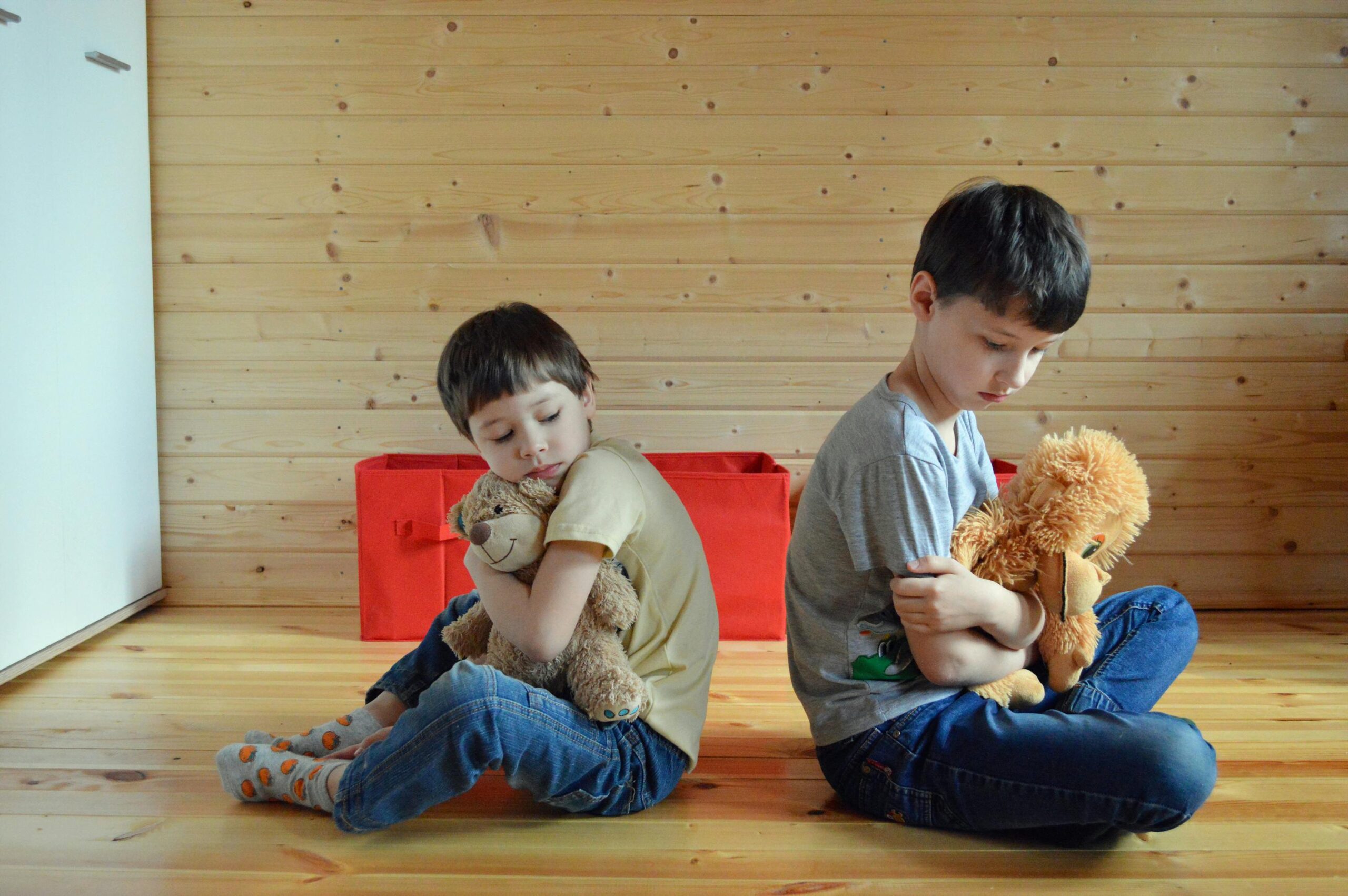
In this article, you’ll learn what to do in the moment, why sibling hitting can keep happening, and how to start changing the pattern without turning your whole home into one long referee shift.
Quick summary
- Sibling conflict is common, but repeated hitting is not something to shrug off as “just siblings.” Recent reviews argue that sibling aggression is often minimised, even though repeated victimisation can make a child feel unsafe at home and is linked with poorer mental health.
- The first job is safety, not a perfect lesson in the heat of the moment.
- After that, the most useful question is usually not “Who started it?” but “What pattern keeps leading here?”
- The broader evidence on childhood aggression still points most strongly toward parent-focused psychosocial approaches such as parent management training, alongside child-focused skills work where needed.
- In the ABA/PBS field, there is also strong support for teaching a safer replacement response that does the job hitting was doing, rather than only telling your child to stop. Recent reviews of functional communication training found decreases in challenging behaviour and increases in communication.
Not sure which part of the pattern to work on first? A free 25-minute Behaviour Clarity Session can help you identify a practical starting point for your family.
For parents, focused on one behaviour in one home routine. No preparation or expectation to buy further support. Book with your name and email; we’ll guide you through consent and brief checks at the start of the call. Session information · Privacy.
When sibling hitting needs taking seriously
Most siblings argue. Most siblings annoy each other. That, on its own, is not unusual.
But repeated hitting is different. It matters more when one child is regularly frightened, hurt, targeted, cornered, dominated, or always ends up losing out. Recent work on sibling aggression and sibling violence argues that it is often overlooked or brushed off as ordinary rivalry, even though it can have real effects on children’s wellbeing. A 2025 cross-national study also found that repeated sibling bullying victimisation was common, and that more positive home environments were linked with lower victimisation.
That does not mean every sibling fight is abuse. It means it is worth taking seriously when the pattern is becoming repeated, one-sided, or harmful.
What to do in the moment
1. Stop the hitting and create space
If your child hits their sibling, step in quickly and calmly.
That might mean:
- moving between them
- guiding them apart
- blocking further hits if needed
- helping each child move to a different part of the room
Keep your words short.
For example:
“I won’t let you hit.”
“Move back.”
“You two need space.”
This is usually more helpful than launching straight into a long lecture. In the broader aggression literature, the best-supported approaches are not based on shouting louder or winning a power struggle in the peak of the moment; they are based on calmer, more consistent parent-led responses and skill-building over time.
2. Check the hurt child first
If one child has been hurt or is upset, attend to that child first.
That matters for two reasons:
- safety comes first
- it avoids the hitting becoming the fastest route to getting all the attention in the room
You do not need to make a big performance of ignoring the child who hit. You are simply making sure the child who was hurt feels protected, and that the moment does not accidentally teach that aggression is the quickest way to take over the family’s attention.
3. Do not try to solve the whole argument on the spot
In the hottest moment, most parents understandably want to find out who started it, extract an apology, teach empathy, and settle the original dispute all at once.
That is often too much.
When children are still worked up, long questioning can pull the conflict out for longer. A better first aim is often:
- stop the hitting
- separate
- settle
- come back to what happened once both children are more able to cope
Why sibling hitting keeps happening
Sibling hitting usually does not keep happening because your child wakes up wanting to be “the aggressive sibling.”
More often, it keeps happening because the same situations keep pulling the same response out.
Common patterns include:
- wanting a toy, turn, or space
- reacting badly to being interrupted
- not tolerating losing
- trying to control what the other child does
- feeling crowded, touched, copied, or provoked
- struggling with waiting
- seeing hitting as the quickest way to end a problem
In simple terms, sibling hitting often sits at the meeting point of:
- frustration
- competition
- proximity
- weak coping skills in the moment
- a pattern that has become effective
That pattern piece matters. If hitting leads to the sibling dropping the toy, the parent rushing over, the argument swinging in one child’s favour, or the whole situation resetting, then the behaviour can keep earning its place. That kind of repeated interaction pattern is very consistent with both parent-management models and function-based behaviour support.
A simpler way to read the moment
A useful question is:
What was your child trying to do right before the hit?
Usually it is something like:
- get something
- keep something
- stop something
- get away from something
- get you there fast
- push the other child back
That does not excuse the hitting. It gives you a better starting point for changing it.
Because if the job of the hitting was “get my toy back,” “make them move,” or “make Mum come now,” then telling your child “use gentle hands” is rarely enough on its own. They need a safer response that can do that job better.
Three common real-life patterns
1. The grabbing pattern
One child has something. The other wants it. Words are brief, then grabbing starts, then hitting follows.
Here the hitting may be tied to:
- blocked access
- poor waiting
- weak turn-taking skills
- no quick route to get adult help before it escalates
2. The annoyance pattern
One child follows, copies, pokes, or irritates. The other child seems to “explode.”
Here the hitting may be tied to:
- low tolerance for irritation
- not knowing how to move away or call for help effectively
- adult attention arriving only once it becomes dramatic
3. The family-stress pattern
The worst incidents happen when everyone is tired, late, hungry, noisy, or crowded.
Here the hitting may be less about one specific sibling issue and more about:
- low coping capacity
- fast escalation
- too little space, structure, or support around flashpoint moments
That wider family context matters. Recent research suggests that more positive home environments are linked with less sibling bullying victimisation, and recent reviews of child aggression continue to emphasise the importance of parent-led intervention rather than only focusing on the child in isolation.
What to do next, once things are calm
1. Pick one sibling hitting pattern first
Do not try to fix “all sibling problems” in one go.
Start with one specific pattern, such as:
- hitting when a sibling grabs toys
- hitting when having to share
- hitting when copied or followed
- hitting during screen-time disputes
- hitting in the car or on the sofa when space is tight
2. Change the setup around the flashpoints
This is often where the biggest early wins come from.
Depending on the pattern, that might mean:
- duplicate high-conflict items where possible
- shorter turns
- clearer turn-taking support
- less unstructured time around the worst flashpoints
- more adult presence during predictable trouble spots
- physical space between children when they are already strained
- earlier separation before contact escalates
This is not “giving in.” It is making the pattern less easy to repeat.
3. Teach a safer response that actually works
This is the part that often gets missed.
If your child hits to get space, stop a sibling, get help, or protect a turn, then they need a safer response that is quick and usable.
That might be:
- “Stop.”
- “My turn.”
- “Help.”
- “Move back.”
- “I need space.”
- handing you a help card
- moving to a safe agreed spot and calling for help
In the behavioural literature, this is the same basic logic behind functional communication training: teach a safer, clearer way to do the job the hitting was doing. Recent reviews found that functional communication training showed large effects for reducing challenging behaviour and improving communication, and parent-implemented versions also showed decreases in child challenging behaviour.
4. Practise the skill before the next argument
Do not wait for the next full sibling row to teach “say stop” or “come get me.”
Practise in calmer moments:
- with role play
- with very small turn-taking games
- with coached phrases
- with quick praise when your child uses the safer response
One thing I’ve found consistently useful is practising the safer response before it is needed. If a sibling picking up a favourite item is a common flashpoint, for example, we might model and rehearse: “Can I have it back, please?” or “Tell an adult.” Occasionally, even pretending to create the situation has been enough to start the escalation cycle, so the rehearsal has had to begin gently and build in small steps. With repeated practice, prompting and praise, I’ve seen children become able to use the skill when they are genuinely distressed and close to losing control.
That is why I would not make a forced apology the main goal immediately afterwards. Even when adults obtain a “sorry”, the tone can tell you that the child is not ready for meaningful repair. Safety comes first. Once everyone is calm, practise the response that could actually help next time.
That matches the broader evidence base too: the most supported approaches for aggression are structured, parent-led, and based on modelling, rehearsal, and feedback rather than one-off telling off.
5. Do not rely on apologies alone
Apologies can matter. But an apology on its own does not change the pattern.
If your child hits their sibling, says “sorry,” then does the same thing tomorrow in the same situation, the main job still has not been done.
The more useful question is:
What should your child do instead next time?
That gives you somewhere to go beyond blame.
Not sure which sibling-hitting pattern to tackle first?
Several of these patterns may sound familiar. You do not have to untangle all of them at once. In a free 25-minute Behaviour Clarity Session, we can look at one recurring sibling situation and decide whether this support is a suitable next step.
Common mistakes that often backfire
Treating it as “just siblings” every time
Some sibling conflict is ordinary. Repeated hitting that causes fear, injury, or one child always losing out needs more than shrugging it off. Recent reviews warn that sibling aggression is often minimised despite its potential impact.
Trying to decide guilt before safety
Safety first. Investigation second.
Giving lots of attention only once hitting starts
This can unintentionally teach that aggression is the fastest way to pull you in.
Trying to fix every sibling problem at once
Choose one hitting pattern first. That is usually more manageable and more effective.
Expecting the hurt child to “sort it out themselves” when the pattern is already repeated
Independent problem-solving is a good goal. It is not a fair expectation when the conflict is already tipping into fear or physical aggression.
FAQ
Is sibling hitting normal?
Sibling conflict is common. Repeated hitting is also common enough that it should not surprise us, but that does not mean it should be dismissed. Recent studies and reviews show that repeated sibling aggression and bullying can be linked with poorer mental health and can make children feel unsafe at home.
When is it more serious?
Take it more seriously when:
- one child is frightened
- injuries are happening
- one child is regularly targeted
- there is a clear power imbalance
- the pattern is getting more frequent or more intense
- the whole family is walking on eggshells around it
Should I make my child apologise?
You can return to repair later, once everyone is calm. But do not expect an apology on its own to solve the pattern. The bigger job is teaching what to do instead next time.
What if both children are hitting?
That can still happen within a pattern where one child escalates faster, one child is more vulnerable, or the family ends up responding differently to each child. It is still worth mapping the pattern carefully rather than writing it off as equal fighting every time.
When should I get more support?
Get more support if the aggression is frequent, worsening, causing injury, creating fear, or starting to feel beyond what you can manage safely at home. NICE guidance supports assessment and psychosocial intervention for persistent aggressive or conduct-type behaviour in children and young people.
A calmer way to think about this
If your child hits their sibling, it does not mean your family is failing.
Usually it means one or more sibling situations have become too practised, too easy to trigger, and too hard for your child to handle well in the moment.
That is hard, but it is also useful. Because it means there is a pattern to work on.
You do not need the perfect response to every sibling clash this week. You need:
- one clearer pattern
- one safer replacement response
- one flashpoint that becomes less explosive than it used to be
That is often how real progress starts.
If sibling hitting is becoming a repeated pattern and you would like help choosing where to start, book a free 25-minute Behaviour Clarity Session.
References
Kalvin, C. B., Zhong, J., Rutten, M. R., Ibrahim, K., & Sukhodolsky, D. G. (2025). Review: Evidence-based psychosocial treatments for childhood irritability and aggressive behavior. JAACAP Open, 3(1), 14–28.

National Institute for Health and Care Excellence. (2024 review of existing guideline). Antisocial behaviour and conduct disorders in children and young people: recognition and management (CG158).

Sethi, A., et al. (2025). Successful evidence-based parenting programs are associated with brain changes and improved reward processing in boys with conduct problems. Biological Psychiatry.

Al-Dubayan, M. N., & Yakubova, G. (2025). Parent-implemented functional communication training to reduce challenging behavior in nonvocal children with ASD and IDD from diverse families: A systematic review.

Blair, K. S. C., et al. (2025). A meta-analysis of functional communication training for challenging behavior.

Tucker, C. J. (2025). Sibling aggression and abuse: Invisible and widespread…

Van Kelecom, E., et al. (2025). Addressing physical and psychological sibling violence: Perspectives from youth care professionals in Belgium. Child Abuse & Neglect.

Toseeb, U., et al. (2025). The prevalence and correlates of sibling bullying victimisation across 18 countries. Child Abuse & Neglect.