What To Do When Your Child Throws Things
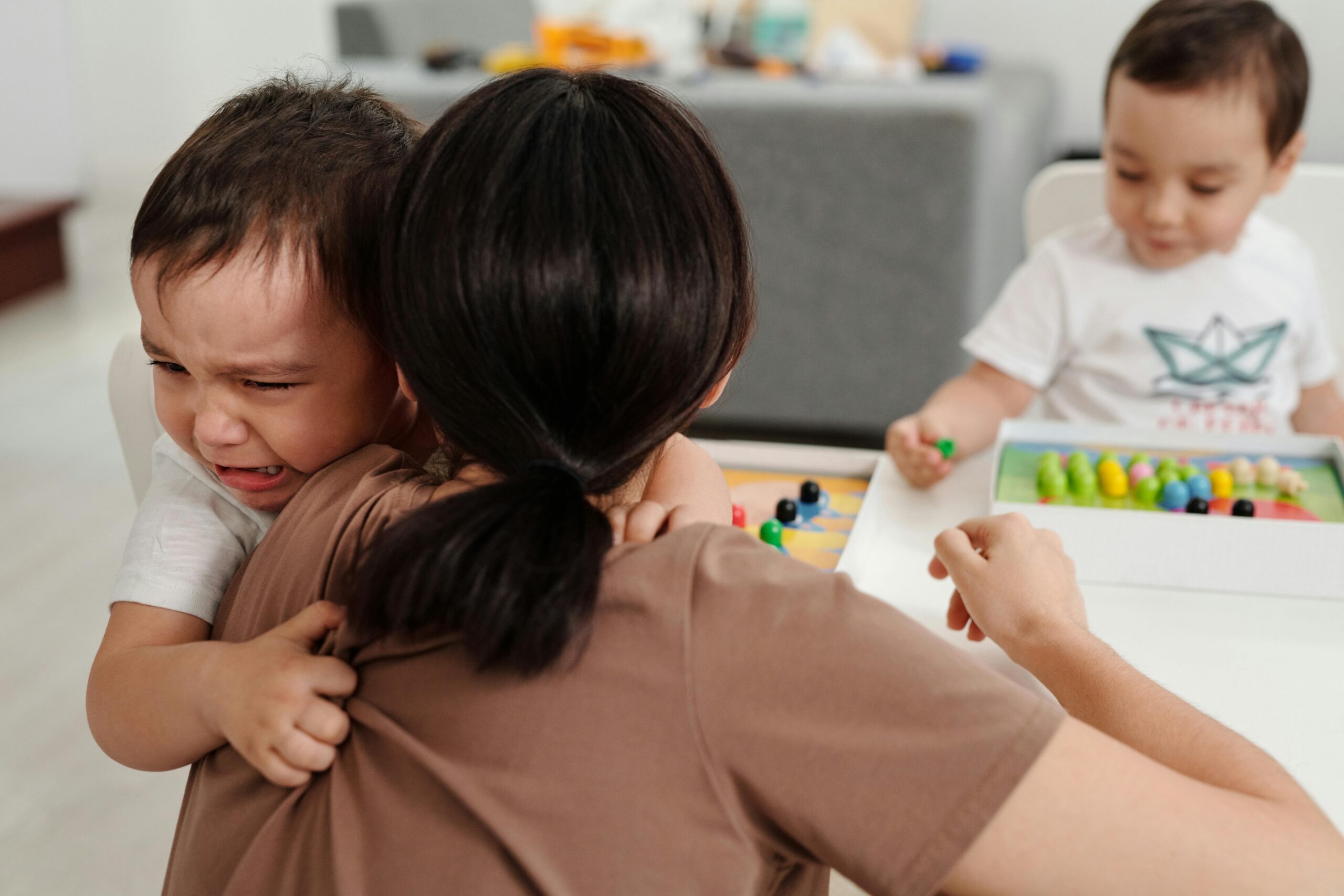
If your child throws toys, shoes, food, remote controls, or whatever is nearest when they are upset, frustrated, or told no, it can make home life feel tense very quickly. This article will help you work out what to do first, what often makes things worse, and what to look for if the behaviour has become a repeatable pattern.
Quick summary
- Start with safety, not a lecture
- Use fewer words in the moment, not more
- Look for what tends to happen before and after the throwing
- Focus on one main behaviour first
- Do not try to solve every difficult behaviour at once
- If the same pattern keeps showing up, track it for a few days before jumping to random solutions
Need a calmer starting point? The Behaviour Pattern Starter Pack helps you focus on one main behaviour first instead of trying to solve everything at once.
When your child throws things, start here
Throwing is one of those behaviours that can feel shocking even when it happens a lot. Sometimes it is a toy across the room. Sometimes it is a plate, a shoe, a phone, or whatever happens to be nearby. It can feel aggressive. It can feel deliberate. It can also leave you trying to think and react at the same time, which is usually when things get more tangled.
The first thing to say is this: do not try to win the moment.
If your child is already escalating, the goal is not to prove a point, finish the argument, or get a perfect apology there and then. The goal is to reduce danger, avoid adding more fuel, and get a clearer picture of the pattern so you know what to change first next time.
That is not “letting them get away with it”. It is being practical.
What to do in the moment
If your child is throwing things, keep your first response simple.
1. Make safety the priority
Move breakable, sharp, or heavy items if you can do that safely. Give other children some space. If there is a real risk of injury, focus on reducing that risk first.
2. Use fewer words
Most parents understandably start explaining, warning, correcting, and asking questions all at once. In the middle of escalation, that often adds more noise, more demand, and more back-and-forth than your child can cope with.
3. Do not crowd the moment
Some children throw more when they feel cornered, blocked, rushed, or watched too closely. That does not mean stepping away and pretending nothing happened. It means thinking, “How do I stop making this harder right now?”
4. Leave the big teaching for later
Once the peak has passed, then you can come back to what happened, what needs repairing, what needs replacing, and what you want your child to do instead next time.
Why throwing often becomes a pattern
Throwing usually does not keep happening just because a child is “naughty” or “angry”. More often, it becomes part of a pattern.
That pattern usually has two parts:
- what makes the behaviour more likely in the first place
- what changes after the behaviour happens
For example, throwing may be more likely when your child is:
- told no
- asked to stop something they want to continue
- moved into a demand
- expected to wait
- in conflict with a sibling
- already running low because of tiredness, illness, hunger, pain, noise, or routine change
Then, after the throwing, something often shifts. The demand may stop. The adult may rush in. A sibling may back off. A long negotiation may begin. The child may get distance from something they did not want, or quick attention from an adult.
That does not make throwing okay. It does mean the behaviour may be doing something useful for your child in that moment, even if it is causing chaos for everyone else. That is exactly why looking at the pattern matters more than reacting to each incident as if it came out of nowhere.
Look for the pattern, not just the incident
This is where most articles stay too vague. If you want something useful, slow the picture down.
Look for slow build-up factors
These are the things that make the whole day harder overall:
- poor sleep
- illness or pain
- hunger
- routine changes
- busy or noisy environments
- lots of demands close together
- general stress in the house
These do not “cause” throwing on their own, but they can make it more likely.
Look for fast triggers
These are the moments that seem to set it off quickly:
- being told no
- being asked to stop
- transitions
- waiting
- sibling conflict
- correction
- losing access to something preferred
- homework, mealtime, bedtime, getting ready
Look for early signs
Often the throwing is not actually the first sign. You may notice:
- louder voice
- grabbing
- pacing
- arguing
- getting closer to objects
- throwing smaller items first
- pushing things around before actually throwing them
The earlier you notice the build-up, the more chance you have of doing something useful before the hardest part lands.
Look for what happens afterwards
This is the part parents often miss because they are relieved the moment is over.
Ask yourself:
- What changed straight after?
- Did the demand stop?
- Did I start negotiating?
- Did I rush in with lots of attention?
- Did everyone else move away?
- Did my child get something back later?
You are not trying to blame yourself here. You are trying to spot what may be keeping the pattern going.
Three common throwing patterns parents often miss
1. Throwing to push a demand away
Your child is asked to stop the tablet, come to the table, start homework, get dressed, or leave the park. They throw something. The routine breaks down. Everything becomes about the throwing instead of the original demand.
In that pattern, the throwing may be helping your child delay or avoid what was coming next.
2. Throwing in frustration when words are not doing the job
Your child wants something, protests, is told no, and then throws. Sometimes these children are not short of feelings. They are short of a better way to get their message across in the moment.
This is where replacement communication becomes important.
3. Throwing inside a bigger conflict cycle
This is common with sibling conflict, repeated power struggles, or difficult routines. The throwing is not a random outburst. It is one move in a familiar sequence.
That matters, because if you only target the thrown object and ignore the rest of the sequence, you tend to stay stuck.
What often makes it worse without meaning to
Parents usually do these things because they are trying hard, not because they do not care.
Giving long explanations in the middle of escalation
Reasonable idea. Bad timing.
When your child is already building or already throwing, a long explanation often lands as more demand, more language, more frustration.
Arguing about what your child “should know”
You may be right. It still may not help in that moment.
Tackling every behaviour at once
If you are dealing with throwing, shouting, hitting, refusal, and sibling conflict all at the same time, it is very easy to become overwhelmed and inconsistent. One of the strongest practical moves is to choose one main behaviour first and get clearer on that before widening out.
Changing the response every day
If Monday is strict, Tuesday is negotiation, Wednesday is warnings, Thursday is shouting, and Friday is giving in, it becomes much harder to see what is happening.
Focusing only on consequences and not on skills
Consequences matter, but consequences on their own often do not tell you what your child could do instead, what made the behaviour more likely, or what needs changing in the routine, environment, or adult response.
What to change first
This is the part that matters most.
Do not start by trying to invent the perfect consequence. Start here instead.
1. Observe
For a few days, write down:
- what happened just before
- what your child did
- what happened straight after
- any early signs you noticed
- anything that seemed to help, even a little
Keep it brief. A few clear notes are usually more useful than a massive emotional write-up.
2. Adjust what you can see
Once a pattern starts to show up, make small adjustments around the likely trigger points.
That might mean:
- reducing obvious throwables before hard transitions
- shortening or simplifying instructions
- giving more warning before stopping something preferred
- spacing out demands
- changing how sibling conflict is managed
- making the next step clearer and calmer
3. Teach a better response
If your child often throws when they mean “not yet”, “help”, “stop”, “I’m not ready”, or “I want that”, then that is a clue.
What could they do instead that is simpler, faster, and more likely to work?
That might be:
- handing you an object instead of throwing it
- using one short phrase
- pointing to a break card
- asking for help
- asking for more time
- learning how to put an item down and step away
The replacement needs to be realistic in the actual moment, not just something that sounds good on paper.
4. Notice what you want more of
Do not wait for a perfect day. Notice the partial wins.
If your child hands something over instead of throwing it, protests without throwing, pauses, asks for help, or recovers faster, those moments matter.
A few realistic examples
A child throws the remote when told to turn the TV off. Every time, the whole evening becomes about calming the scene down. In that case, the throwing may be helping delay the transition.
A child throws pencils during homework after several corrections in a row. The homework then gets abandoned. In that case, the pattern may involve frustration, repeated correction, and escape from the task.
A child throws toys at a sibling when attention shifts away from them. Everyone rushes in. In that case, the pattern may be tied to conflict plus rapid adult attention.
Different surface details. Same principle: look at what tends to make it more likely, and what tends to happen after.
Spot what tends to build before throwing or damage starts
Get the Behaviour Pattern Starter Pack — a calm, practical way to track one main behaviour for 5 days and spot what may be making it more likely.
- A simple start-here guide
- A 5-day Behaviour Pattern Tracker
- Pattern-review pages to help you notice triggers, early signs, and what may be keeping the behaviour going
- A clear explanation of when a more structured behaviour-mapping process may help
FAQ
Should I punish my child for throwing things?
There is no single line that works for every family, but punishment on its own is usually too blunt to tell you what is driving the behaviour or what your child should do instead. If the pattern is repeatable, you will usually get further by looking at triggers, early signs, what happens afterwards, and what replacement response needs teaching.
Is throwing always about anger?
No. It can be linked to anger, frustration, overload, blocked access, transitions, demands, sibling conflict, or a fast way of changing what happens next. “Anger” may describe how it looks. It does not always explain the pattern.
What if my child only throws things when I say no?
That is useful information. It suggests limits, blocked access, or transitions away from something preferred may be part of the pattern. That gives you something concrete to track.
When should I get more help?
Get more help sooner if there is a serious injury risk, significant property damage, a strong safeguarding concern, or the pattern is affecting family life heavily. The Starter Pack is educational and practical, but it is not a crisis service, and it is not a substitute for urgent support where risk is high.
Final reassurance
If your child throws things, it does not automatically mean they are simply bad, defiant, or beyond help. It usually means that, in certain situations, the behaviour has become part of a pattern that is doing something for them.
That is actually useful news.
Because patterns can be understood far better than random chaos can.
The next helpful step is usually not more blame, more panic, or a bigger lecture. It is to focus on one main behaviour first, look at what tends to happen before and after, and get a calmer starting picture.
If this article sounds familiar, the next useful step is usually to track one main behaviour for a few days and look for the pattern around it. That is exactly what the Behaviour Pattern Starter Pack is there to help you do.
References
Centers for Disease Control and Prevention. (2024, May 15). Parent training in behavior management for ADHD.

Helander, M., Asperholm, M., Wetterborg, D., Öst, L.-G., Hellner, C., Herlitz, A., & Enebrink, P. (2024). The efficacy of parent management training with or without involving the child in the treatment among children with clinical levels of disruptive behavior: A meta-analysis. Child Psychiatry & Human Development, 55(1), 164–181. doi:10.1007/s10578-022-01367-y

National Institute for Health and Care Excellence. (2024, May 21). Antisocial behaviour and conduct disorders in children and young people: Recognition and management (NICE guideline CG158).

National Institute for Health and Care Excellence, & Social Care Institute for Excellence. (2019). Reducing the risk of violent and aggressive behaviours: A quick guide for registered managers of mental health services for young people.

Tiger, J. H., Hanley, G. P., & Bruzek, J. (2008). Functional communication training: A review and practical guide. Behavior Analysis in Practice, 1(1), 16–23. doi:10.1007/BF03391716