Why Children Run Away in Public
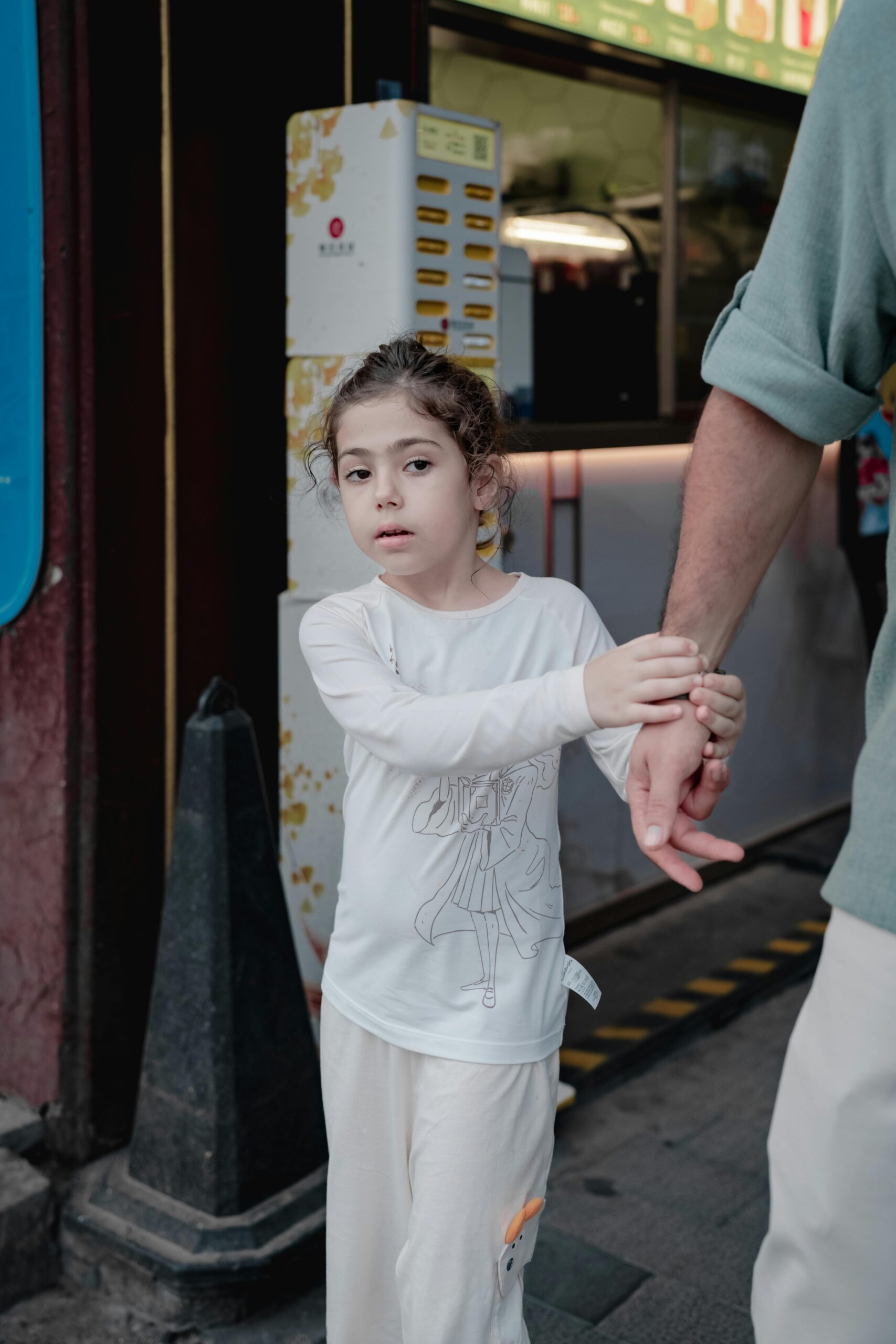
In this article, you’ll understand why your child may run away or bolt in public, the different behaviour patterns this can reflect, and what signs to look for so the behaviour feels less random and more understandable.
Quick summary
- Children do not all run away in public for the same reason.
- For some children, the behaviour is mainly about getting toward something strongly wanted.
- For others, it is more about getting away from something difficult, overwhelming, or frustrating.
- In many families, the clearest pattern shows up around transitions, waiting, crowds, leaving somewhere preferred, or seeing something highly interesting.
- A useful first step is not trying to explain everything at once. It is noticing which kind of pattern this looks most like.
Would it help to work out which pattern fits? If running off has become a repeated safety concern, a free 25-minute Behaviour Clarity Session can help you identify one practical starting point.
For parents, focused on one behaviour in one home routine. No preparation or expectation to buy further support. Book with your name and email; we’ll guide you through consent and brief checks at the start of the call. Session information · Privacy.
When your child runs away in public, it can feel frightening and confusing
If your child suddenly pulls away in a car park, bolts across open space, runs toward a road, or disappears the moment you stop to speak to someone, it can feel like the behaviour comes out of nowhere.
That is often what makes it so stressful.
It is not just the risk.
It is the feeling that you do not fully understand what is driving it.
And when a behaviour feels dangerous and unpredictable, it is very easy to collapse everything into one conclusion:
They just run off.
But that usually hides something important.
Because children can run away in public for different reasons, and those differences matter.
A child who runs toward something exciting is not showing exactly the same pattern as a child who runs to escape noise, waiting, or a difficult transition.
The behaviour may look similar on the outside.
The pattern underneath may be quite different.
Why children may run away in public
There is no single explanation that fits every child.
But in many families, the behaviour becomes easier to understand when you start with one question:
Was your child moving toward something, away from something, or both?
That question is not perfect.
But it is often much more useful than labels like:
- naughty
- defiant
- not listening
- doing it for attention
Those labels usually do not tell you what to look for next.
By contrast, toward and away often do.
Pattern 1: Running toward something strongly wanted
For some children, running off is mainly about access.
They see something highly interesting, highly preferred, or hard to resist, and they move toward it fast.
That might be:
- a play area
- water
- a favourite aisle
- lifts or escalators
- an open door
- another child
- a vehicle
- an animal
- a familiar destination
In this type of pattern, the running often feels very purposeful.
It may happen quickly and with little hesitation.
The behaviour is less about the whole outing and more about the strength of the pull in that moment.
Signs this pattern may fit
- your child tends to run toward the same kinds of things
- the behaviour is more likely when something preferred comes into view
- the running is less likely when those strong pulls are absent
- the behaviour often happens before any clear adult demand or transition
- once your child gets closer to the thing they wanted, the urgency may reduce
Real-life example
Your child is mostly fine walking through town, but the moment they see a fountain, they sprint toward it.
That suggests the pattern may be driven more by the pull of the fountain than by public settings in general.
Pattern 2: Running away from something difficult or overwhelming
For other children, the behaviour makes more sense as escape.
They may run because the environment has become too noisy, too crowded, too demanding, too unpredictable, or too uncomfortable.
That might involve:
- loud shops
- crowded spaces
- waiting in a queue
- a confusing transition
- leaving somewhere preferred
- being rushed
- being corrected sharply
- sensory overload
- too much happening at once
In this kind of pattern, running off can act like a very fast way of saying:
I need to get out of this.
That does not mean your child could calmly explain it that way.
It means the behaviour may be functioning that way in the moment.
Signs this pattern may fit
- the behaviour is more likely in busy, loud, or demanding settings
- your child seems more unsettled before the running starts
- there are signs of strain, agitation, slowing down, or protest before the run
- the behaviour is less likely in quieter, simpler public places
- once your child is away from the difficult situation, the intensity may drop
Real-life example
Your child stays close in a small quiet shop but runs in a crowded supermarket.
That suggests the supermarket may be harder because of load, not simply because it is public.
Pattern 3: Running during transitions away from something preferred
This is one of the clearest and most common public patterns.
The outing itself may be going relatively well until it is time to:
- leave the park
- come away from the toy aisle
- stop watching trains
- get out of the pool area
- leave soft play
- finish at a favourite place
Then the running starts.
In this pattern, the behaviour is often less about public settings in general and more about the moment of ending or losing access.
The risk point is the transition.
Signs this pattern may fit
- your child manages the outing fairly well until it is time to leave
- the running is tightly linked to “finished” moments
- the same outing can look very different depending on whether you are arriving or leaving
- the behaviour is much less likely once your child has fully moved on
- the run often seems like an attempt to regain access or delay the ending
Real-life example
Your child is happy at the park. The moment you say it is time to go, they bolt back toward the climbing frame.
That suggests the key issue may be the transition away from the park, not the park itself.
Pattern 4: Running in low-structure, slow, or uncontained moments
Some children do not mainly run because something is highly preferred or because the setting is overwhelming.
Instead, the pattern seems strongest in moments where public routines slow down and structure drops.
That might include:
- waiting outside school
- standing at the till
- stopping to chat
- loading the car
- walking through a car park
- pausing on a pavement
- moving between one part of an outing and another
In these moments, the problem may be less about one strong trigger and more about:
- opportunity
- low structure
- reduced predictability
- low momentum
- fewer clear signals about what to do
Signs this pattern may fit
- the behaviour happens most in “in-between” moments
- it is less about one obvious preferred item or one obvious aversive situation
- your child seems to drift, wander, or suddenly move when the pace drops
- the behaviour is less likely when the routine is active, clear, and moving
- the risky part is often the pause, not the main activity
Real-life example
Your child does not run during the shopping itself, but regularly runs in the car park while you are getting bags into the boot.
That suggests the high-risk moment may be the low-structure transition, not the whole outing.
Many children show a mix of patterns
Real life is rarely as neat as one category.
A child may:
- run toward something strongly wanted in one setting
- run away from overload in another
- and be especially risky during transitions on a hard day
That is why the goal is not to force the behaviour into a perfect label.
The goal is to ask:
Which pattern seems strongest most often?
That question is usually enough to make the next step clearer.
What often gets missed
1. The behaviour may not be random
Public running-off often feels chaotic because it happens fast.
But when parents start looking closely, they often notice the same:
- places
- moments
- transitions
- sensory conditions
- adult responses
- preferred items
- difficult demands
coming up again and again.
2. The same behaviour can look similar but mean different things
Two children may both run in a shopping centre.
One may be running toward escalators.
The other may be running away from crowding and noise.
The visible behaviour looks similar.
The pattern underneath is different.
3. A hard day can amplify a known pattern
Sleep, hunger, illness, pain, routine change, sibling conflict, or general strain can make an existing public pattern much more likely.
That does not always create a brand-new problem.
Often it turns the volume up on one that was already there.
4. Running-off risk can quietly shrink family life
In practice, I’ve seen running-off risk affect far more than the outing where it happens. One parent may feel physically able to manage the school journey while another does not. Families may avoid parks, shops, holiday activities or anywhere close to roads, open exits or other hazards. Leaving the child with somebody else can also become difficult if that person does not feel able to manage the risk without additional support.
That creates a different kind of pressure. Parents are already balancing childcare with shopping, housework, employment and everything else family life demands. When every ordinary outing also requires constant planning, scanning and risk management, the family’s world can gradually become smaller.
Understanding the likely function of the behaviour is important because the same visible act of running can require very different support. In one situation I worked with, the movement of running itself appeared to be rewarding for the child. Providing planned opportunities to run safely therefore made sense as part of the support. We also practised transitions in contained environments and taught the child to check with an adult by asking, “Can I run here?”, with clear responses such as “yes”, “not here” or “later”.
That would not automatically be the right approach for every child. If a child is running to reach something they want, the safer alternative may involve asking for access or approaching it with an adult. If they are running away from noise, crowding or another difficult experience, they may need a way to request a break, communicate discomfort or move safely to a quieter place. Simply providing more opportunities to run would not address either of those functions.
This is why strategies should not be copied just because they worked for another family. The replacement needs to achieve the same outcome for the child in a safer and more acceptable way. Once that relationship is understood, support can become more precise and safe participation can gradually begin to expand again.
What to notice first if you want more clarity
You do not need a full assessment to start seeing useful clues.
Try noticing:
- where the behaviour happens most often
- what was happening just before
- whether your child seemed to be moving toward or away from something
- whether the run happened during a transition
- whether the environment was noisy, crowded, slow, or unpredictable
- what changed immediately after
That is often enough to move from:
“This keeps happening and I don’t know why”
to
“I can see the kinds of moments where this is more likely.”
Not sure which running-off pattern to focus on first?
You do not need to explain every outing at once. In a free 25-minute Behaviour Clarity Session, we can look at one recurring running-off situation and decide whether this support is a suitable next step.
Common mistakes in interpretation
Treating all running-off as defiance
That can make the pattern harder to see, not easier.
Assuming it is just one kind of behaviour
Running toward a pond and running away from a noisy queue may not be the same pattern.
Looking only at the run itself
The most useful clues are often in what happens before and after.
Trying to explain everything at once
Start with the strongest recurring pattern, not every possible factor.
Frequently asked questions
Does running off always mean your child is not listening?
Not necessarily.
Sometimes the behaviour makes more sense when you look at what your child is trying to get to, get away from, delay, or change.
What if your child only runs away in one kind of place?
That is often very useful information.
It usually means the behaviour is linked to something specific about that setting or moment.
What if your child runs off both toward things and away from things?
That can happen.
The most useful question is usually which pattern seems strongest most often.
When should you get urgent help?
Seek urgent local help if:
- your child is going missing
- there have been near misses with roads, water, transport, heights, or strangers
- retrieval is highly dangerous
- you cannot keep public settings reasonably safe right now
If your child is missing and in immediate danger, call 999.
For practical preparation before the next outing, see how to make a public safety plan when your child runs off.
A calmer next step
If your child runs away in public, you do not need to have the whole explanation perfectly worked out.
A useful first step is simply to start seeing the pattern more clearly.
When you can tell the difference between:
- running toward
- running away
- running during transitions
- running in low-structure moments
the behaviour usually starts to feel less random.
And once it feels less random, it becomes much easier to decide what to change first.
A clearer starting point
If running off has become a repeated safety concern and you would like help choosing where to start, book a free 25-minute Behaviour Clarity Session.
This session is not an emergency service. If there is an immediate risk of serious harm, use the appropriate urgent or emergency support instead.
References
American Academy of Pediatrics. (2023). Keep kids safe from wandering: Tips from the AAP. HealthyChildren.org.

Boyle, M. A., Adamson, R. M., Hall, S., & McComas, J. J. (2017). Systematic review of functional analysis and treatment of elopement (2000–2015). Behavior Analysis in Practice, 10(4), 343–351.

Piazza, C. C., Hanley, G. P., Bowman, L. G., Ruyter, J. M., Lindauer, S. E., & Saiontz, D. M. (1997). Functional analysis and treatment of elopement. Journal of Applied Behavior Analysis, 30(4), 653–672.

Phillips, L. A., Briggs, A. M., & Vollmer, T. R. (2018). Assessing and treating elopement in a school setting. Education and Treatment of Children, 41(3), 367–388.