Why Children Scream or Shout
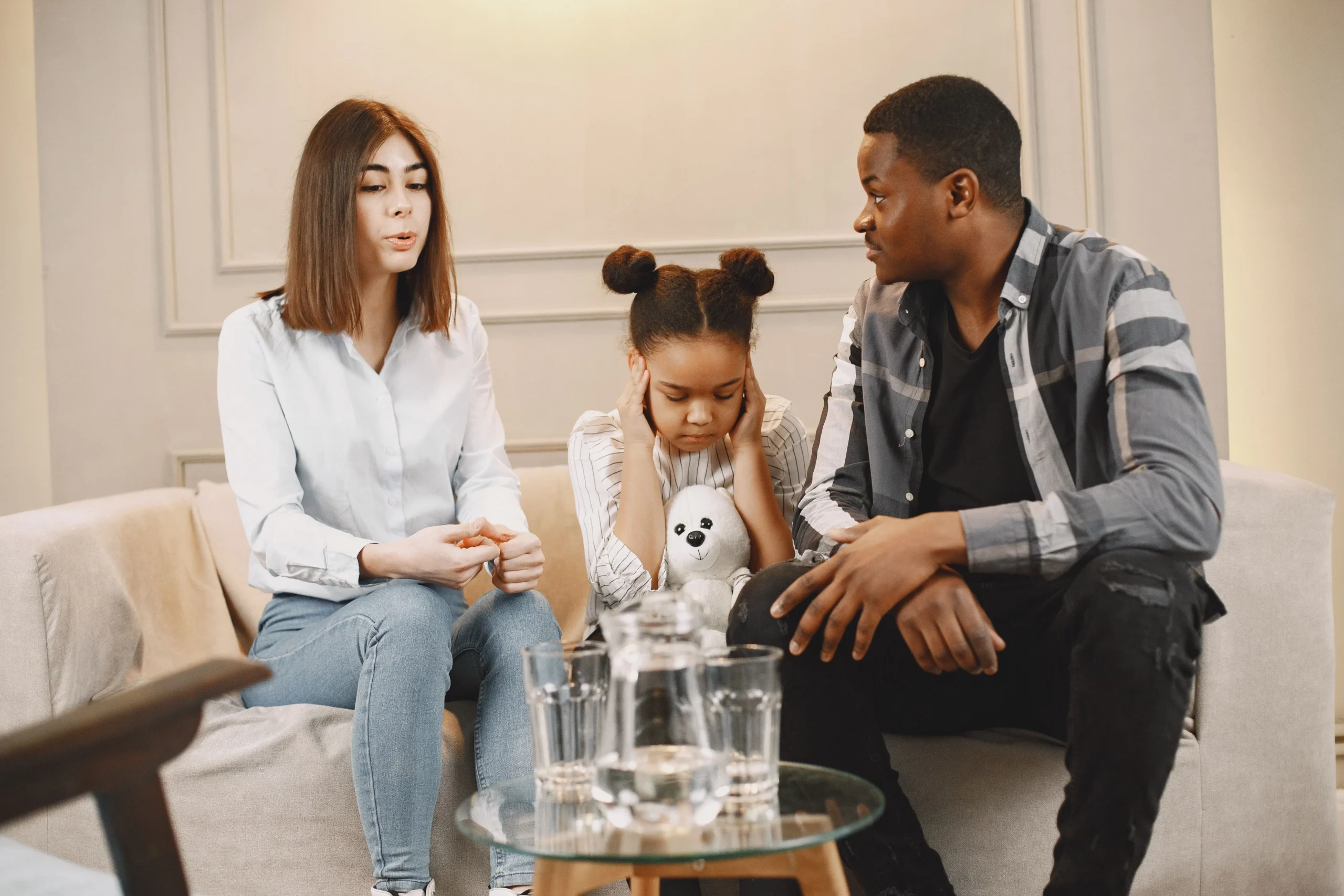
What this article will help you understand
If your child keeps screaming or shouting, this article will help you understand why it may be happening, why it may keep happening, and what the pattern around it may be showing you.
The goal isn’t to label your child as naughty, dramatic, manipulative, or “just attention-seeking”, but to understand what the screaming or shouting may be communicating, what it may be changing, and what your child may not yet be able to manage in a calmer way.
Quick summary
Children scream or shout for different reasons.
Sometimes they are frustrated. Sometimes they are overwhelmed. Sometimes they are trying to get something, avoid something, delay something, stop something, bring you closer, or show that they cannot cope with the situation as it is.
The sound may be the same, but the reason may be different.
A child who screams when the tablet ends may be in a different pattern from a child who screams when the room is too noisy, or a child who shouts whenever a parent is busy.
The useful question isn’t: “Why are they being so loud?”
A better question is: “What does screaming or shouting seem to mean or change in this situation?”
That question can help you move from reacting to understanding.
If you are unsure what the screaming or shouting may be communicating or changing, a free 25-minute Behaviour Clarity Session can help you think through one repeated situation and identify a sensible next step.
For parents, focused on one behaviour in one home routine. No preparation or expectation to buy further support. Book with your name and email; we’ll guide you through consent and brief checks at the start of the call. Session information · Privacy.
The quick answer: screaming usually tells you one of three things
When a child screams or shouts repeatedly, it usually points to one or more of these:
- Something is too hard, too much, or too frustrating.
Your child may not yet have the skills to handle the situation calmly. - The screaming changes something.
It may delay a demand, restart negotiation, bring attention, stop a sibling, or make an adult change what happens next. - Your child does not yet have a better communication route.
Screaming may be the fastest or clearest way they currently have to say “help”, “stop”, “I want that”, “I need you”, “too much”, or “I cannot do this”.
This does not mean screaming is acceptable or something to ignore.
It means the screaming is information.
The aim is to work out what kind of information it is giving you.
Screaming is communication, but not always in the same way
It can feel like the noise is the whole problem.
It’s loud. It can be stressful. It can make home feel tense. It can be embarrassing in public. It can leave parents feeling judged, criticised, or completely worn down.
But screaming is usually part of a bigger pattern.
It may be a way of saying:
“I want that.”
“I do not want this.”
“This is too hard.”
“I need you.”
“Stop.”
“I need space.”
“I cannot wait.”
“I cannot cope with this much.”
“I do not know another way to get through this moment.”
That doesn’t mean you should let screaming take over.
It means the first useful step is understanding what the screaming is connected to.
A child who screams because they are overwhelmed may need a different kind of support from a child who screams because it sometimes gets them extra screen time.
The noise may look similar.
The reason may not be.
What kind of scream or shout is it?
Parents often ask, “Why does my child scream?”
A more useful question is:
“What kind of screaming is this?”
Use this table as a starting point.
| What the screaming or shouting looks like | What it may suggest | What to look at next |
|---|---|---|
| Angry shouting after being told no | Frustration, blocked access, difficulty accepting limits, or a negotiation pattern | Does shouting delay the no, restart discussion, or sometimes change the answer? |
| Screaming when asked to do something | Task difficulty, demand avoidance, uncertainty, or needing help | Is the task too sudden, too big, unclear, boring, or difficult? |
| Screaming with crying, clinging, or panic | Distress, fear, anxiety, tiredness, separation difficulty, or overwhelm | What happened before? Was your child tired, rushed, worried, or overloaded? |
| Shouting when an adult is busy | Need for attention, connection, help, or a faster adult response | Do calmer bids for attention get missed? Does shouting bring you close quickly? |
| Screaming in noisy, crowded, or busy places | Sensory overload, uncertainty, fatigue, or low coping capacity | Does it reduce when the environment becomes quieter, clearer, or less demanding? |
| Shouting over adults | Escalation cycle, learnt communication pattern, or everyone trying to be heard | Do adults become louder too? Does the whole interaction become a volume contest? |
| Sudden unusual screaming | Pain, illness, sleep difficulty, anxiety, or another support need | Is this new, intense, happening at night, or very different from normal? |
| Repeated shouting in the same routine | A practised family pattern | Does it happen around the same routine, time, or transition again and again? |
This table is not a diagnosis.
It is a way of narrowing your thinking.
Instead of asking, “Why does my child scream?” in general, you can start asking:
“Why does my child scream in this situation?”
That is much easier to understand.
The most useful question: what does the screaming change?
If screaming or shouting keeps happening, it is worth looking at what happens after it.
Not because you are trying to blame yourself.
Because behaviour often repeats when it changes the situation in some way.
For example:
A child screams when screen time ends.
The adult explains, argues, gives warnings, negotiates, and sometimes gives more time.
The screaming may be delaying the transition or sometimes getting more screen time.
Or:
A child shouts when a parent is cooking.
The parent stops cooking, turns around, talks, corrects, explains, or comes closer.
The shouting may be bringing adult attention quickly.
Or:
A child screams when asked to brush teeth.
The parent pauses the routine, talks for ten minutes, and eventually everyone is too tired to finish properly.
The screaming may be delaying or reducing the demand.
Or:
A child screams in a busy shop.
The parent moves them away from the noise, lights, waiting, or crowd.
The screaming may be showing that the situation has become too much.
These are different patterns.
That is why “my child screams” is not specific enough.
The better starting point is:
“My child screams when…”
That is where understanding begins.
Seven common reasons children scream or shout
The same child may scream for different reasons in different situations.
Here are seven common patterns to look for.
1. Screaming because something was blocked
This is one of the most common patterns.
Your child wants something.
You say no, not now, wait, finished, or later.
The screaming starts.
This might happen around:
- sweets
- toys
- screens
- going first
- staying longer
- another story
- another turn
- buying something in a shop
- leaving somewhere enjoyable
In this pattern, screaming may be connected to blocked access.
Your child wanted something, and the answer was no, not now, or finished.
The screaming may not mean:
“I am trying to upset you.”
It may mean:
“I cannot tolerate this no yet.”
Or:
“This has worked before when I wanted the answer to change.”
Or:
“I do not know what to do with this disappointment.”
This does not mean you should simply give in.
It means the “no” moment is the pattern to understand.
Ask:
- Does screaming sometimes change the answer?
- Does it lead to more negotiation?
- Does it delay the ending?
- Does it bring a lot of adult attention?
- Does my child have a better way to handle disappointment?
The missing skill may be coping with no, asking for another choice, waiting, or moving on.
2. Screaming because a demand feels too hard
Some children scream or shout when they are asked to do something.
This might happen around:
- getting dressed
- brushing teeth
- homework
- leaving the house
- coming to the table
- tidying up
- getting into the car
- turning off a game
- going to bed
- starting a non-preferred task
In this pattern, the screaming may be connected to escape, delay, or task difficulty.
Your child may not be thinking:
“I will scream so the task disappears.”
But if the task often pauses, reduces, changes, or disappears after screaming, the pattern can become stronger.
This is especially likely when the task is:
- too sudden
- too long
- too unclear
- too difficult
- too boring
- too close to another demand
- happening when your child is tired or hungry
- something your child has struggled with before
Ask:
- Does screaming usually delay the task?
- Do I end up explaining for a long time?
- Does the demand become smaller only after screaming?
- Is the first step too big?
- Does my child know how to ask for help or a break?
The missing skill may be asking for help, asking for a break, starting the first step, or tolerating a short demand.
3. Screaming because your child needs attention or connection
“Attention” can sound blaming, so it needs careful handling.
Children need attention. They need connection. They need adults to notice them.
Sometimes shouting becomes the fastest way to get that attention.
This might happen when:
- you are cooking
- you are on the phone
- you are working
- you are talking to another adult
- you are caring for a sibling
- you are trying to rest
- you are doing chores
- your child has made quieter bids that were missed
The pattern may be:
Parent busy → child tries small bids → parent does not respond yet → child shouts → parent turns quickly
That does not mean your child is “just attention-seeking” in a dismissive way.
It may mean your child has learned that shouting gets a response faster than calmer communication.
Ask:
- Does shouting happen more when I am unavailable?
- Does my child get a faster response when they shout?
- Do quieter bids for attention get missed?
- Have we taught a simple way to ask for attention?
- Can I notice the earlier signs before shouting starts?
The missing skill may be saying “look please”, tapping gently, waiting briefly, or using a clearer attention request.
4. Screaming because the situation is overwhelming
Sometimes screaming is not mainly about getting something or avoiding something.
Sometimes it’s a sign that the situation has become too much.
This might happen when there is:
- noise
- crowding
- bright lights
- rushing
- lots of instructions
- uncertainty
- tiredness
- hunger
- pain
- anxiety
- sensory discomfort
- a change in routine
- too many people talking
- a long period of holding it together
This pattern can be easy to misread.
Your child may look like they are “kicking off over nothing”, but the visible trigger may only be the final straw.
For example:
Your child has coped with school, noise, transitions, demands, and waiting all day.
Then a small change at home leads to screaming.
The small change may not be the full reason. It may be the point where coping ran out.
Ask:
- Was my child tired, hungry, rushed, or overloaded?
- Had there been a lot of demands before the screaming?
- Was the environment noisy, crowded, bright, or unpredictable?
- Did the screaming reduce once pressure, noise, or demands reduced?
- Does this happen after school or after busy days?
The missing support may be predictability, recovery time, fewer words, a break, sleep support, sensory adjustment, or help noticing early signs.
5. Screaming because your child does not have a better communication route yet
Some children scream because it is the clearest or fastest communication they have in the moment.
This can be especially relevant when a child has:
- limited spoken language
- delayed language
- difficulty finding words under pressure
- difficulty explaining feelings
- difficulty asking for help
- difficulty saying no safely
- difficulty asking for a break
- difficulty describing pain or discomfort
- difficulty being understood
Even children with strong language can lose access to words when they are overwhelmed.
A child may be able to explain beautifully when calm, but still scream when the moment is too much.
Ask:
- What was my child trying to communicate?
- Did they have an easier way to say it?
- Could they ask for help, break, space, attention, or another choice?
- Do they need a gesture, picture, object, or shorter phrase?
- Does screaming happen when words are hardest to find?
The missing skill may be functional communication: a simpler, safer way to communicate the same need.
That might be:
“Help.”
“Break.”
“Too much.”
“Look.”
“Stop.”
“I’m angry.”
“Space.”
For some children, it may be a gesture, card, sign, or pointing response.
6. Screaming because adults become louder too
This is uncomfortable but important.
Sometimes the whole family pattern has become loud.
A child shouts.
The adult shouts over the child.
The child gets louder.
The adult gets firmer.
Everyone ends up escalated.
This doesn’t mean the parent is bad.
It usually means the home has become a high-pressure environment where everyone is trying to be heard.
But children learn from the pattern around them.
If shouting becomes the main way people get attention, win space, stop a demand, or show frustration, children may copy that pattern.
Ask:
- Do adults raise their voices in this situation too?
- Does my child get louder when I get louder?
- Does anyone feel listened to unless they shout?
- Is the whole routine becoming a volume contest?
- Can I lower my words before trying to lower my child’s voice?
This isn’t about parent blame.
It’s about pattern awareness.
Sometimes one of the most powerful changes is the adult quietly deciding:
“I am not going to compete with the screaming.”
7. Screaming because it has become part of a repeated family routine
Sometimes screaming starts for one reason and continues because it has become part of the routine.
For example:
Every bedtime includes shouting.
Every screen ending includes screaming.
Every homework start includes shouting.
Every supermarket trip ends in screaming.
Every school morning involves raised voices.
At that point, your child may begin to expect the pattern.
The parent may expect it too.
Everyone enters the situation already tense.
The screaming is no longer a random incident. It has become part of the family script.
Ask:
- Does this happen in the same routine again and again?
- Do I already expect screaming before it starts?
- Does my child already expect conflict?
- Has the routine become too long, too verbal, or too unpredictable?
- What would need to change before the screaming usually begins?
This is often where tracking one pattern for a few days can help.
Not to make the parent feel like a scientist, but to make the pattern visible enough to change.
A quick pattern guide
Use this table to help you narrow the likely reason.
| If screaming or shouting usually happens when… | It may be connected to… | The missing skill or support may be… |
| You say no | blocked access or disappointment | coping with no, asking for another choice, waiting |
| You ask your child to do something | task difficulty, delay, or escape | asking for help, asking for a break, starting small |
| You are busy | attention or connection | asking for attention calmly, waiting briefly |
| A sibling comes close | space, control, or irritation | saying stop, asking for space, getting help |
| Screen time ends | transition away from something preferred | ending routines, warnings, help stopping |
| Your child is tired or hungry | low coping capacity | food, rest, fewer demands, earlier support |
| The place is noisy or crowded | overwhelm or sensory load | space, reduced pressure, predictability |
| Your child cannot explain what is wrong | communication difficulty | simpler words, gesture, card, pointing, help request |
| Adults become louder too | escalation cycle | adult calm, fewer words, repair after shouting |
| The same routine always ends in shouting | repeated family pattern | changing the setup before the flashpoint |
This table is not a diagnosis.
It’s a way to stop guessing.
If you are still unsure which pattern fits your child, the free 25-minute Behaviour Clarity Session gives you space to talk through one repeated situation and check whether the session is suitable for your family.
Why “attention-seeking” is often the wrong phrase
Parents often hear that children scream for attention.
Sometimes that is partly true.
But “attention-seeking” is often used in a way that sounds dismissive, as if your child is doing something fake or shallow.
A better phrase is:
attention-needing
Or even better:
attention has become part of the pattern
If screaming reliably brings the adult closer, gives a longer conversation, changes the emotional intensity, or pulls the parent away from something else, then attention may be part of what keeps the behaviour going.
That doesn’t mean ignoring your child’s need.
It means teaching a safer way to meet that need.
For example:
“Look please.”
“Play with me.”
“Help.”
“Mum, come.”
Then the calmer request needs to work.
The goal is not less connection.
The goal is connection that does not require screaming.
Why screaming can continue even when it “doesn’t work”
Parents sometimes say:
“But I never give in, and they still scream.”
That can happen for several reasons.
First, screaming may work in a different way than you think.
It may not get the item, but it may delay the demand, bring attention, stop a sibling, or change the emotional tone of the room.
Second, the behaviour may have worked in the past, so your child keeps trying it.
Third, the screaming may be linked to overwhelm, not just getting something.
Fourth, your child may not yet have a better skill that works reliably.
Fifth, the pattern may be inconsistent. If screaming works one time in ten, that can still be enough to keep it going for some children.
The important thing is not to argue with yourself about whether it “works”.
The better question is:
“What happens after the screaming that might make this more likely next time?”
I’ve heard parents understandably say that screaming does not get their child anything and therefore cannot be reinforcing the behaviour. From the adult’s perspective, that can feel completely accurate: they said no and did not simply hand over everything the child wanted. However, when we look at the whole interaction, we sometimes find a smaller compromise—“Okay, two more minutes, but only this once,” or, “You can have a little bit, and then that’s it.”
As parents, that compromise can feel like we have maintained control and brought a difficult moment to an end. From a behavioural perspective, however, the extra time or partial access still followed the screaming or continued negotiation. Even if it happens only occasionally, it can keep the pattern going because persistence has sometimes changed the outcome. This is not about blaming parents; real life includes tiredness, pressure and competing demands. It is about noticing that small exceptions also teach, then making the boundary more predictable while ensuring a calmer request is the response that works more reliably.
Why children may scream more at home than elsewhere
Many parents wonder why their child screams more at home than at school, childcare, or with other adults.
There are several possible reasons.
Home may:
- be where your child feels safest to release emotion.
- have different boundaries.
- have more access to preferred things.
- involve more difficult routines, such as mornings, meals, screens, siblings, homework, and bedtime.
- be where tiredness shows up after a long day of coping.
- also be where the pattern has had the most practice.
This does not mean home is the problem.
It means home is where the pattern is most visible.
That can be hard, but it is also useful. Visible patterns are easier to understand than hidden ones.
When screaming or shouting may need extra attention
Some screaming and shouting can be understood as part of frustration, communication, overwhelm, or repeated family patterns.
But it is worth getting extra support if:
- the screaming is sudden or very different from usual
- your child seems in pain
- there are sleep problems, night waking, or intense distress
- your child is also hitting, biting, throwing, running off, or hurting themselves
- siblings or adults feel frightened
- your child takes a very long time to recover
- the behaviour is happening across home, school, or childcare
- your child seems anxious, withdrawn, or constantly on edge
- there are concerns about hearing, communication, sensory needs, trauma, development, or mental health
- you feel close to losing control or responding unsafely
A general article can help you understand patterns, but it cannot replace personalised support where risk is high, the behaviour is escalating, or the cause is unclear.
How to work out which reason fits your child
You do not need to fix everything immediately.
Start by trying to understand one repeated screaming or shouting pattern.
Choose one situation, such as:
- screen time ending
- being told no
- getting dressed
- homework starting
- bedtime
- sibling conflict
- waiting
- public places
- parent being busy
For three to five examples, write down:
- What happened before?
- What did the screaming or shouting look like?
- What happened after?
- What did the screaming seem to change?
- What might my child need to learn or be supported with?
This is often the first step towards a calmer plan. Not because tracking magically solves the behaviour. Because it helps you stop reacting to the noise alone and start seeing the pattern around it.
If you want help understanding one repeated screaming or shouting pattern
If screaming or shouting keeps happening and you are unsure what may be driving it, the free 25-minute Behaviour Clarity Session gives you space to talk through one repeated situation. We can clarify what to observe next and whether further support may be appropriate.
FAQ
Why does my child scream over small things?
Sometimes the visible trigger is only the final straw.
Your child may already be tired, hungry, rushed, overwhelmed, frustrated, or close to their limit. The small thing may be where their coping runs out.
It is still worth setting boundaries, but it helps to look at what built up before the screaming.
Why does my child shout when I say no?
Saying no blocks access to something your child wants.
If shouting has ever delayed the no, changed the answer, brought more negotiation, or created a bigger adult response, it can become part of the pattern.
Your child may also need help learning how to cope with disappointment.
Why does my child scream when asked to do simple tasks?
A task that looks simple to an adult may feel difficult, sudden, boring, overwhelming, unclear, or too long to a child.
Screaming may delay the task or show that your child needs help, a smaller first step, or a clearer routine.
Why does my child scream when I am busy?
Your child may have learned that shouting brings you close faster than quieter requests.
This does not mean they are bad.
It means they may need a clearer way to ask for attention and more practice with short waits.
Why does my child scream more at home than school?
Home may be where your child releases emotion after holding it together elsewhere.
Home may also have more familiar routines where screaming has become practised, such as screens, siblings, bedtime, or getting ready.
The difference does not mean you are failing. It means the pattern may be strongest at home.
Is screaming a sign of autism, ADHD, anxiety, or sensory needs?
It can be connected to communication differences, impulsivity, anxiety, sensory overload, difficulty with transitions, or emotional regulation.
But it is better not to assume the reason from a label alone.
Look at the specific pattern: when it happens, what happens before, what happens after, and what helps.
Should I ignore screaming?
Not as a blanket rule.
If your child is unsafe, overwhelmed, frightened, in pain, or unable to communicate, ignoring may be unhelpful.
A better first step is to understand the pattern.
Sometimes the adult response needs to be calmer and briefer, but your child may still need support and a better way to communicate.
What if I shout back?
That happens in real homes.
Repair matters.
When calm, you can say:
“I shouted earlier. I’m sorry. I’m practising using a calmer voice too.”
That models the skill you want your child to learn.
Then return to the pattern you are trying to understand.
A calmer way to think about screaming and shouting
If your child screams or shouts, it does not mean you have failed.
It usually means something in that moment is too difficult, too useful, too practised, or too poorly supported for your child to handle quietly yet.
That is hard, but it is also useful.
Because if there is a pattern, there is something to understand.
You do not need to solve every loud moment this week.
Start with one repeated situation.
Look at what happens before.
Look at what happens after.
Ask what the screaming seems to mean or change.
Then ask what your child may need instead.
That is often where a calmer response begins.
References
American Academy of Pediatrics. (2018). Effective discipline to raise healthy children. Pediatrics, 142(6), e20183112.

Gerow, S., Hagan-Burke, S., Rispoli, M., Gregori, E., Mason, R., & Ninci, J. (2018). A systematic review of parent-implemented functional communication training for children with ASD. Behavior Modification, 42(3), 335–363.

Gerow, S., Neitzel, J., & Dash, A. (2018). Functional communication training: The strength of evidence across disabilities. Exceptional Children, 85(1), 86–103.

Helander, M., et al. (2024). The efficacy of parent management training with or without involving the child in the treatment among children with clinical levels of disruptive behavior: A meta-analysis. Child Psychiatry & Human Development.

Kalvin, C. B., Zhong, J., Rutten, M. R., Ibrahim, K., & Sukhodolsky, D. G. (2024). Evidence-based psychosocial treatments for childhood irritability and aggressive behavior. JAACAP Open.

National Health Service. (n.d.). Dealing with child behaviour problems.

National Health Service. (n.d.). Temper tantrums.

National Institute for Health and Care Excellence. (2013). Antisocial behaviour and conduct disorders in children and young people: Recognition and management (CG158).